
What should be in place before bale removal?
Identify the model, serial number and installed unloading system. Make sure the operator has the correct manual and has been trained for that machine. A general article cannot establish the sequence for opening doors, tying a bale or operating an ejector.
Plan the destination of the finished bale before it is produced. Allow room for the unloading equipment and a clear route to the storage or collection area. Handling equipment and any pallet must suit the load and the arrangement specified for the machine.
Confirm the required tying material and bale format with NORKAM and your collector. These decisions belong to the operating process; they should not be improvised when the machine is full.
How are vertical balers emptied?
Vertical balers compress material downwards in a chamber. Once a bale has been formed and secured according to the manual, the model's unloading system is used to remove it. The equipment and controls vary across the vertical category.
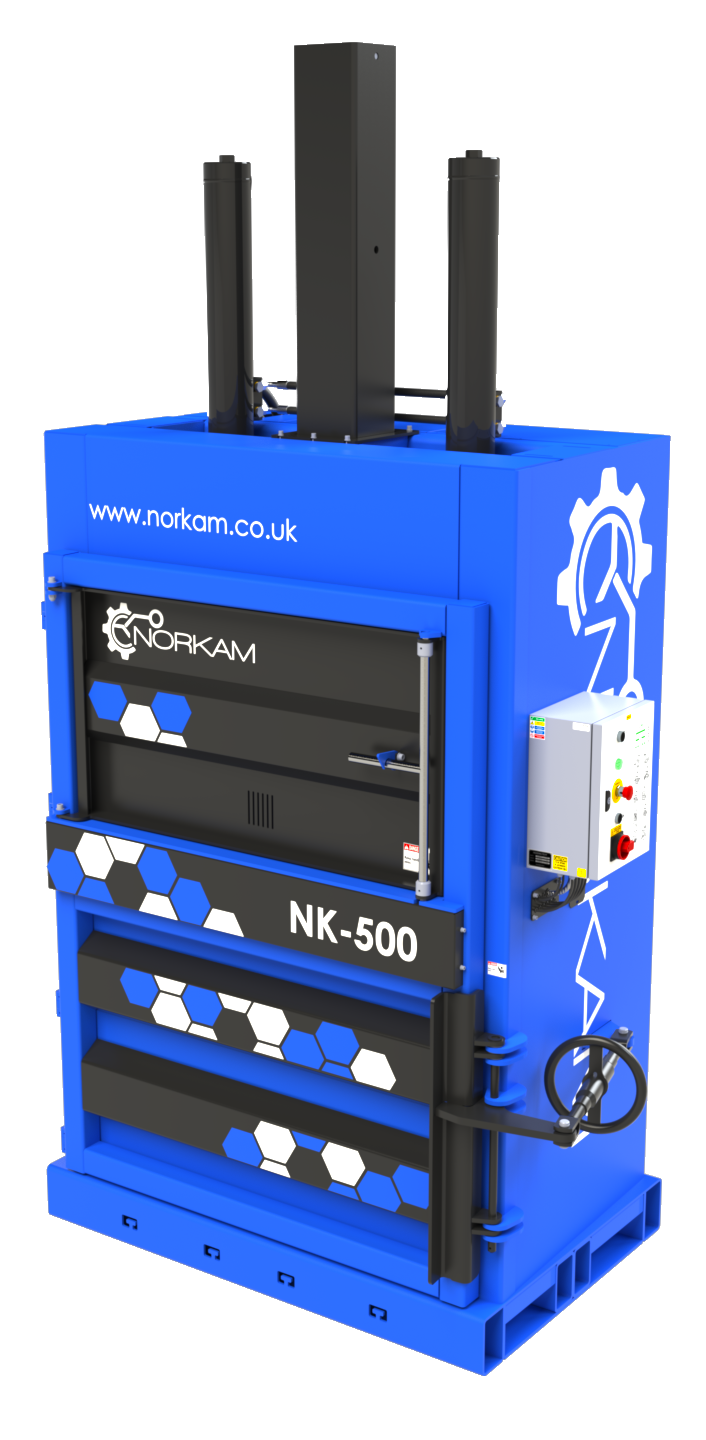
NORKAM's NK-60 lists a bale unloading trolley. The NK-500 lists hydraulic bale ejection. These are different handling arrangements, so instructions for one model must not be applied to the other.
When planning a vertical baler installation, consider the space outside the chamber as well as the machine footprint. Access for the trolley, pallet or other specified handling equipment is part of the working area.
How does horizontal bale removal differ?
Horizontal machines compress along their length. Their bale discharge arrangement and the route for moving a finished bale should be included in the site layout from the start.
NORKAM's horizontal range is semi-automatic. Do not assume that semi-automatic means automatic tying or that every machine uses the same discharge sequence. Confirm the tying, ejection and handling arrangements for the actual model and configuration.
The amount of clearance required depends on the equipment and the handling method. Discuss where bales will be received, how they will be moved and how that route will be kept separate from other site activity.
What if a bale does not eject or the machine stops?
Stop using the machine if unloading does not work as expected and follow the fault procedure in its manual. Do not reach into the chamber, defeat an interlock or attempt to force a trapped bale out.
Blockage clearance and maintenance require a planned safe system of work. HSE highlights secure isolation from energy sources, including stored energy, and appropriate training. An emergency stop is not a substitute for an isolation procedure.
Contact the service team with the model, serial number, material being processed and the displayed fault message. Explain what happened before the problem. This gives the team useful information without asking an operator to improvise a repair.
Plan the finished bale's route to collection
The job continues after the bale leaves the machine. Agree a suitable storage area and handling method, and confirm your collector's requirements for bale dimensions, weight and tying.
Choose handling equipment for the actual load. Published cardboard bale weights describe a specified application; the result can vary with material and operating conditions. Review access and collection arrangements when you change the waste stream or baler.
If you are choosing a new machine, discuss unloading and operator training alongside the main specification. A machine that fits the available floor space still needs a practical route for its finished bales.
Common questions
Do all vertical balers have automatic ejection?
No. Unloading depends on the model. NORKAM lists a trolley for the NK-60 and hydraulic bale ejection for the NK-500. Use the instructions supplied with the installed machine.
Can I use one unloading procedure for every baler?
No. Door controls, tying and ejection systems differ. Use the machine-specific manual and training, and contact NORKAM if anything is unclear.
What should I do if a bale is stuck?
Stop, follow the machine's fault procedure and contact the service team. Do not enter or reach into the chamber or bypass safety devices.