
Map the points where packaging comes off
Walk the route from receiving through storage and picking to despatch. Record where cardboard and film are removed, the containers staff use and the distance to the collection point. Include returns and damaged deliveries, because their packaging may arrive in a different condition.
Observe the busiest delivery and restocking periods as well as a normal shift. Record whether the difficulty is loose storage, repeated handling, a queue at the baler or the timing of collections. Each problem calls for a different change; a larger machine alone will not resolve every delay.
Keep cardboard and film identifiable
Ask the recycling collector which cardboard grades and film types they accept, and what preparation is required. Show them examples of printed film, labels and other packaging that may be present. Agree a route for unsuitable material so staff are not left to guess.
Put clear collection instructions where the packaging is removed. Distinguish clean packaging from material affected by product spills or other contamination. A baler does not sort or clean the contents of a mixed container, so the quality of the eventual bale starts with these everyday decisions.
Balance proximity with the complete workflow
A position close to goods inward may shorten one transfer while making access from the picking area more difficult. Compare the journey for each significant waste stream and for finished bales. Allow for replenishment trolleys, pallet movements and the collection vehicle in the site assessment.
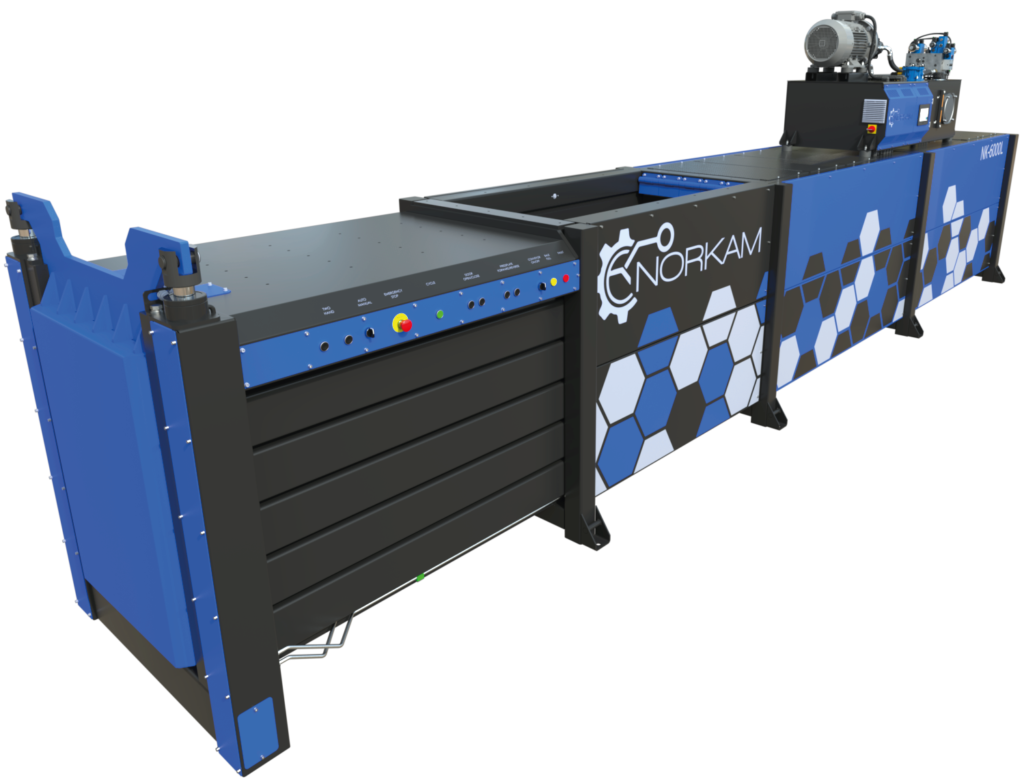
A compact vertical machine may be worth assessing for a smaller stream handled in batches. A sustained, concentrated flow may justify discussing a horizontal machine. The choice still depends on the actual material, loading arrangement, available space and collector requirements. Use model specifications rather than the size of the building as the deciding information.
Work through a delivery peak before changing equipment
Consider an illustrative warehouse where most pallet wrapping is removed in the morning, while cartons accumulate during afternoon picking. This is a planning example, not a NORKAM customer case study. A daily waste total would hide the fact that two streams need attention at different times.
The team could first record each peak, provide separate collection points and agree when trained staff transfer material for baling. They would then assess whether the proposed machine can fit that routine and whether there is room for material awaiting processing. The exercise may reveal a transfer problem, a staffing gap or a need to review the machine proposal.
Check the arrangement again during a seasonal peak or a changed delivery schedule. Compare like-for-like activity and record the remaining queues rather than assuming a quieter week proves that the change has worked.
Treat collection as part of the plan
Agree how finished bales are identified, stored and presented to the collector. Confirm their acceptable format and collection arrangements before selecting a model. A bale that is convenient to produce still needs to fit the onward handling process.
Give one person responsibility for booking collections and name cover for absences. Set a site-specific point for requesting a collection based on the agreed storage area and lead time. Plan what happens if a collection is delayed so the next delivery does not compete with stored waste for space.
Prepare a useful brief for NORKAM
Bring photographs of the packaging and working areas, records from normal and peak periods, and a plan showing goods inward, picking and despatch. Include your collector's requirements and the power supply information available from the site team.
Describe the result you need: fewer internal transfers, a more organised storage area or a different collection routine. NORKAM can use that context to discuss the relevant models. Any expected financial benefit should be checked against your actual labour, collection and equipment costs.
Common questions
Can cardboard and plastic film go into the same bale?
Keep them as separate streams unless your equipment supplier and collector have explicitly agreed a suitable mixed-material arrangement. Acceptance depends on the recycling route, and not just on whether material can be compressed.
Should a warehouse always choose a horizontal baler?
No. Compare the quantity and timing of waste, the loading process, the available working area and the collector's requirements. A warehouse with a modest packaging stream may have different needs from a busy distribution operation.