
Separate packaging from the production process
List the waste generated at goods inward, material preparation, each production stage and final packing. Describe the material and any contact with oils, chemicals, food or other substances. Similar-looking packaging can need a different route once it has been used.
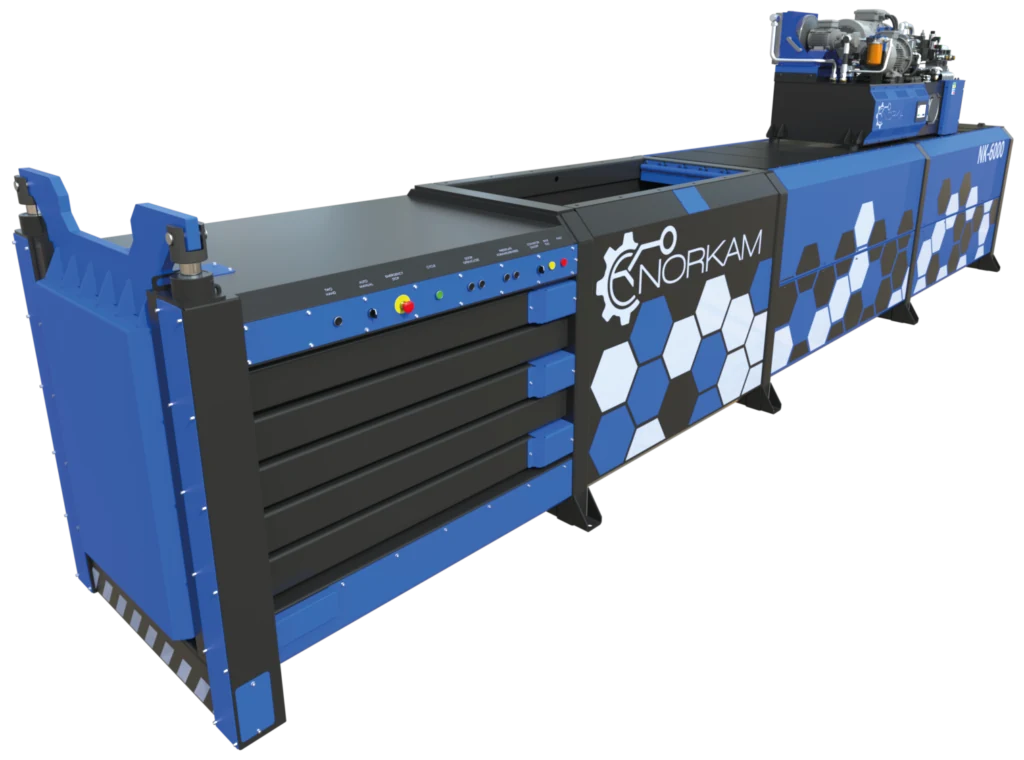
NORKAM lists cardboard, paper and plastic film among the supported applications for its balers, with additional listed materials on the horizontal range. That does not establish suitability for every industrial offcut, container or rejected product. Ask for an application review before including a new material in the proposed stream.
Build the waste map around production stages
Use the existing production layout to mark where packaging is removed and where it waits for transfer. Record who owns each point and who takes over when the container leaves the area. This helps reveal gaps between production, housekeeping and warehouse responsibilities.
Keep the map specific. 'Cardboard from component deliveries' is more useful than 'factory waste' because the material, source and likely timing are identifiable. The following prompts can be added to a site walk-through; they are not a list of materials approved for baling.
| Work area | Questions to resolve |
|---|---|
| Goods inward | Which cartons and wraps are removed here, and can any packaging be returned or reused? |
| Production supply | Where does packaging accumulate when a batch of materials is issued? |
| Packing and despatch | Which clean packaging remnants are produced, and how are they separated? |
| Internal collection | Who transfers each stream, at what point, and along which route? |
| Finished bale storage | How are bales identified, handled and made available for collection? |
Plan for batch peaks and changeovers
Measure the pattern within a shift, not only the weekly total. A delivery of components or the start of a batch may release packaging much faster than the average suggests. Record both the quantity and the time window in which it needs to be handled.
Compare that pattern with the proposed loading routine, the availability of trained operators and the space for material awaiting processing. Ask the supplier to assess the actual application; pressing force or motor power alone does not tell you how quickly your team can clear a particular stream.
Compare local collection with a central baling area
One central point can simplify responsibility, but it also creates transfer journeys from each production area. Local collection points may keep disposal convenient while relying on a scheduled internal service. Compare the complete route before choosing where equipment should stand.
For an illustrative site with packaging removed at both component stores and final packing, draw the two journeys separately. Mark any shared access, holding points and the route for finished bales. This is a layout exercise, not a claim that one arrangement is best for every factory.
Discuss the proposed working area, power, service access and discharge arrangements with NORKAM. Include the people who run production and internal logistics, since a location that appears spare on a plan may be needed during changeovers.
Assign responsibility for material quality
Give staff an agreed route for packaging that falls outside the accepted stream. Identify who can answer questions about an unfamiliar liner, a changed supplier's packaging or material affected by a spill. Confirm acceptance before sending it to the baler.
Keep the collector's material requirements with the site instructions and review them when the product or packaging changes. Record collection feedback and rejected material so the production team can trace an issue to its source instead of repeatedly dealing with it at despatch.
Measure the result against production activity
Compare packaging waste and handling time with a relevant activity measure, such as completed batches or units dispatched. Record changes in product mix as well. A lower total during a quiet month does not establish that packaging use or handling has improved.
Use those records to decide whether the next change belongs in purchasing, production layout, internal collection or machinery. Share the material descriptions, peak pattern and proposed layout with NORKAM when discussing a baler. A clear operating brief is more useful than selecting by pressing force alone.
Common questions
Can a packaging baler also process production offcuts?
Do not assume so. Material composition, size, condition and the proposed configuration need to be assessed. Supply representative material information to NORKAM and confirm the collector's requirements before changing the application.
Should baling be centralised across the factory?
Compare transfer distances, peak timing, available staff, working space and collection access. A central machine and local collection points can be considered, but the layout and responsibilities need to fit the particular production process.